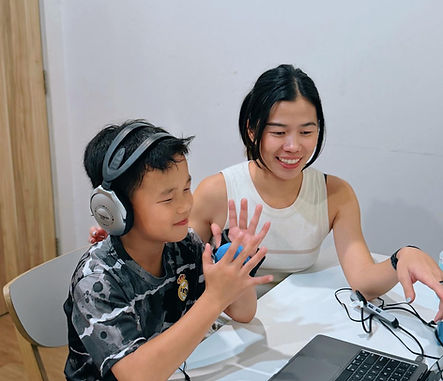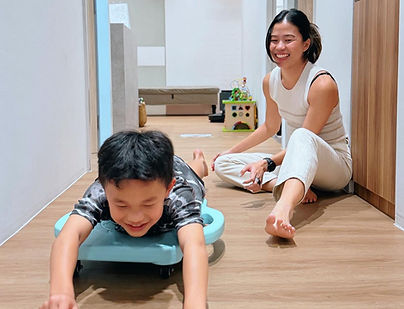
Our Occupational Therapists support children and youths up to 21 years old through engaging, fun and evidence-based therapy!
Best Place to Book Occupational Therapy Sessions
Concerned about your child's development?
Many parents come to us wondering:
"Why is my child so easily distracted and not able to follow instructions?"
​
"Why is my child avoiding writing and forgetting school work?"
​
"Why does my child have frequent meltdowns?"
"Why is it so hard for my child to play nicely with others?"
"Why is my child so clumsy? He still needs help with dressing and spills food everywhere!"
​
You are not alone- early support can make a world of difference.


What Occupational Therapy Can Help With
We support younger children in building foundational skills for school and daily life
Attention &
Learning
-
Difficulty sitting still
-
Trouble completing homework
-
Difficulty following instructions
Handwriting &
Fine motor
-
Poor handwriting and messy work
-
Poor pencil grip
-
Difficulty cutting, drawing or colouring
motor skills & coordination
-
Clumsy, poor balance
-
Difficulty with sports and playground
-
Trouble jumping and catching ball
SENSORY
PROCESSING
Emotional
rEGULATION
-
Sensitive to sounds, textures, touch or movement
-
Seeks excessive movement (spinning, jumping, crashing)
-
Difficulty coping with transitions
-
Big outbursts and frequent melt downs
-
Oppose instructions
Younger Children (Early Years and Primary)
Older Children, Teens and Youths
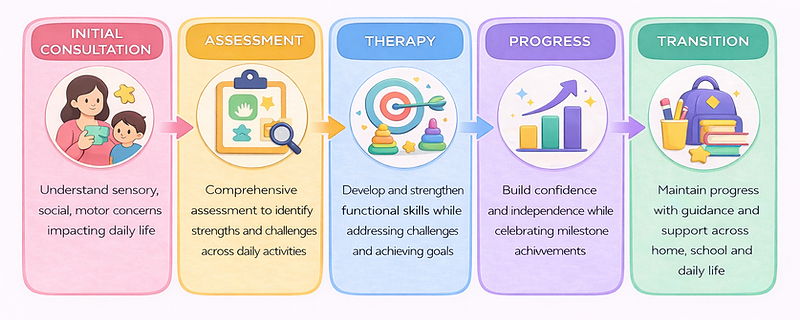
How Occupational Therapy Works
Initial Consultation
Understand needs of children and families
Assessment
Occupational Therapy assessments to identify strengths and challenges
Therapy
Evidence-based Occupational therapy in the centre, at home or in school
Progress
Track progress and goals. Equip caregivers with practical strategies
Discharge
Maintain skills with guided transition support
We support older children and adolescents in building independence, confidence and life skills:
School Skills
-
Difficulties with attention
-
Poor organisation, planning and time management
Emotion &
Mental Health
-
Social anxiety
-
Difficulty managing mood and frustration
-
Poor impulse control
-
Low self esteem
sOCIAL skILLS & bULLYING
-
Difficulty making and maintaining friendship ​​
-
Building assertiveness and confidence
fUNCTIONAL
lIFE SKILLS
Tic management & Regulation
-
​Ordering food independently
-
Managing daily routines
-
Vocational training
-
Awareness of tics and strategies of managing tics

Occupational Therapy Evidence Based Approaches
​​​​​
We use a range of proven, research-based approaches, tailored to your child’s needs:
​
-
Social Thinking
-
Sensory Integration
-
Routines Based Interview
-
Alert Program for Self-Regulation
-
Cognitive Orientation to Daily Occupational
-
DIR Floortime
Learn to Play Therapy
-

Early Start Denver Model
-
Executive Functioning Skills training
-
Handwriting/Learning Without Tears
-
Performance Approach
-
Therapeutic Listening Program
-
Zones of Regulation
Still not sure if your child needs Occupational Therapy?
A simple conversation can help you feel clearer about your child's next steps. Reach out to us for a free guidance call with our therapist!​​​​
Or fill out our enquiry form to get started with therapy services at Little Marvels. This form helps our team better understand your child’s needs so we can provide the most appropriate support.
Frequently Asked Questions about Occupational Therapy
How do I know if my child needs occupational therapy?
If your child or youth has difficulty with attention, handwriting, coordination, sensory sensitivities, emotional regulation or daily routines, an Occupational Therapy consultation can help.
​
What age should a child start occupational therapy?
Children can start speech therapy as early as 6 months to 2 years old if there are concerns about engagement, social skills, play, fine and gross motor skills. Early intervention is important, as it can significantly improve a child’s ability to participate in daily activities, play and social interactions.
​
What does a occupational therapy session involve?
Occupational therapy sessions are play-based, engaging and tailored to your child’s needs. Sessions may include: Movement and Coordination, Executive Functioning training, Handwriting and Fine Motor skills, Social and Emotional Skills, Positive Behaviour management and more!. Parents, caregivers and teachers are often guided and coached on strategies to use at home or in schools to support progress.
​
How long does occupational therapy take to see results?
Progress depends on your child’s needs, consistency of therapy, and practice at home. Some children show improvement within a few sessions, while others may require longer-term support. Your therapist will provide clear goals and regular updates.
​
Can my child grow out of these difficulties?
Some children do improve over time, but it can be difficult to predict. Early support helps prevent challenges from affecting your child’s learning, confidence and social participation
A consultation with an Occupational Therapist can help you understand whether your child is on track and what supports are needed.
​
Do you use equipment like swings, sensory tools or gym setups?
Yes. We use a range of therapy equipment where appropriate. However, our approach is functional, goal and evidencebased.
We focus on helping your child succeed in real-life situations, not just in the therapy room.
We will only recommend tools or strategies that are relevant and beneficial to your child’s needs.
​
How is your Occupational Therapy approach different?
We focus on helping children apply skills in real-world environments- at home, in school and in the community.
We work closely with families to understand your child, set meaningful goals and provide practical strategies you can use daily. We believe that the parent-child relationship is essential to a child's development. As such we involve parents through coaching and guidance during sessions, so you feel confident supporting your child- after all you spend most time with them! We also have the support of a multi-disciplinary team so information and updates are coordinated and shared across disciplines so that sessions can be more targeted.
​
My child is not able to write fast enough during examinations. Can you help with school access arrangements?
Yes- we can support your child to apply for school access accommodations by providing a detailed clinical report that you can submit to your child’s school . Our Occupational Therapists conduct standardised assessments (e.g. handwriting speed, fine motor skills, visual-motor integration) to understand your child’s difficulties. Based on findings, we will determine whether your child may benefit from accommodations such as extra time etc.
​
Where needed, we work closely with our Educational Psychologist to provide a more comprehensive understanding of your child’s profile. If your child undergoes further assessment with us (e.g. learning or cognitive assessments), we are able to integrate findings across disciplines into a unified report. This provides:
-
A clearer and more accurate picture of your child’s strengths and challenges
-
Stronger clinical recommendations
-
More comprehensive support for school-based accommodations
This collaborative approach helps ensure that recommendations are well-supported and meaningful for both home and school settings.
​
What is the Therapeutic Listening Program (Vital Sounds)?
The Therapeutic Listening Program (Vital Sounds) is a specialised listening program designed to support: sensory processing, attention and regulation and emotional responses. It involves listening to modified music through headphones as part of a structured programme. The use of Therapeutic Listening depends on your child’s specific sensory and regulatory needs.
We will only recommend it if it is clinically appropriate and beneficial for your child.
What is Interactive Metronome and how does it help?
Interactive Metronome is a structured programme that helps improve timing, coordination, attention, focus and motor planning
It uses rhythmic exercises to strengthen the brain’s ability to process timing, which supports learning and movement. Like all our interventions, Interactive Metronome is used only when it aligns with your child’s goals and needs.
We prioritise individualised therapy, rather than a one-size-fits-all approach.
​
​For More Questions on Occupational Therapy Contact Us
371 Beach Road, #02-51
Citygate,
Singapore 199597
​
Explore
​
Follow Us
Featured In:
© 2022 by Marvels Therapy Pte Ltd
​
Opening Hours:
Mon - Sat 9am - 6pm
Sunday 9am - 1pm


.jpeg)
.jpeg)

.png)