

.jpeg)
Child Development Milestones in Singapore: A Parent's Guide to Every Stage — and When to Seek Help
- Little Marvels Therapy
- 2 days ago
- 9 min read

By the Little Marvels Team — Speech Therapists, Educational Psychologists, Counsellors, Play Therapist and Occupational Therapists supporting children and families in Singapore.

Quick answer: Most children develop at their own pace, and many "worrying" phases — night waking at 4 months, clinginess at 9 months, meltdowns at 2 — are normal signs of growth, not problems. You should consider seeking help from a speech therapist, occupational therapist, or educational psychologist if your child is consistently behind on key milestones (for example, no single words by 16 months, no two-word phrases by 24 months, or losing skills they once had), or if a difficulty is interfering with daily life. Early support leads to better outcomes, and an assessment can simply offer reassurance if nothing is wrong.
Every parent watches their child for signs that everything is "on track." But development isn't a straight line — it comes in bursts, plateaus, and the occasional dramatic regression that can leave you wondering what happened to your easy baby. Understanding what's typical at each age, and recognising the genuine red flags, takes a lot of the guesswork and anxiety out of parenting.
This guide walks through the key developmental stages from infancy to the early school years, what's normal at each, when it's worth checking in with a professional, and which type of professional can help.
What Is A Developmental "Touchpoint"?

A Touchpoint is a predictable point of disruption that comes just before a developmental leap. Around these moments, children often regress in sleep, feeding, or behaviour — not because something is wrong, but because their brain is reorganising itself for new skills. The disruption is the growth. Knowing this helps you respond with patience instead of panic, and it helps you tell the difference between a normal wobble and a sign worth investigating.
Child Development Milestones At A Glance
Age | What's typically happening | Possible signs to check in | Who can help |
4 months | More alert, sleep cycles maturing, social smiling | No eye contact or response to your voice; no social smile; very low muscle tone | Paediatrician, occupational therapist |
9 months | Object permanence, stranger awareness, babbling | No babbling, pointing or gestures; doesn't respond to name; very limited eye contact; not sitting | Speech therapist, occupational therapist |
15 months | First words, walking, big emotions, independence | No single words by 16 months; no gestures; lost skills they previously had | Speech therapist, educational psychologist |
2 years | Word combinations, strong will, "no" and "mine" | Fewer than 50 words or no two-word phrases; extreme rigidity; very limited social interaction | Speech therapist, diagnostic assessment |
3–4 years | Imagination, endless questions, clearer speech | Speech hard for strangers to understand by age 4; very repetitive or rigid play; little interest in other children | Speech therapist, educational psychologist |
5 years | School transition, perfectionism, social comparison | Persistent school refusal; significant struggles with reading/writing or following instructions | Educational psychologist, counsellor |
6 years | Deep social awareness, friendship dramas, self-comparison | Persistent low mood; learning consistently behind peers; ongoing friendship difficulties | Counsellor, educational psychologist |
This table is general guidance, not a diagnostic tool. Children vary widely, and only a qualified professional can assess your individual child.
Milestones And Red Flags, Stage By Stage
4 Months: The First Big Reorganisation

At around 4 months, your baby becomes far more aware of faces, voices, light and movement. Their sleep cycles mature, which is why a baby who slept through the night may suddenly start waking again. This is normal. Respond consistently, keep bedtime predictable, and give plenty of face-to-face time — their social brain is waking up.
Check in with a professional: if your baby isn't making eye contact or responding to your voice by 3–4 months, isn't smiling socially, shows very low muscle tone or limited limb movement, or if feeding difficulties are affecting weight gain.
9 Months: Object Permanence And Separation Anxiety

Around 9 months, babies grasp that people and things still exist when out of sight. This cognitive leap is why separation distress and stranger anxiety appear — and both are signs of a securely attached baby who knows who their safe person is. Play peek-a-boo, give short warm goodbyes (never sneak away), and offer a comfort object.
Check in if your baby isn't babbling, pointing or gesturing by 9–10 months, doesn't respond to their name, shows very limited eye contact or social engagement, or isn't sitting independently or bearing weight on their legs.
15 Months: Walking, Words, and Meltdowns

This is one of the most intense periods of early childhood. Toddlers crave independence but lack the language, motor control and emotional regulation to manage it — so frustration spills over. They're not giving you a hard time; they're having a hard time. Narrate their world, offer simple choices, and keep routines consistent.
Check in if your toddler has no single words by 16 months or no two-word phrases by 18–24 months, isn't using gestures, has lost skills they previously had, has meltdowns that are extremely prolonged and hard to recover from, or if you have any concern about their hearing.
2 Years: The Developmental Explosion (The "Terrible Twos")

The "terrible twos" aren't a personality flaw — they're a child discovering they are a separate person with their own will. The defiance and tantrums are part of figuring out who they are. Connect before you correct, offer autonomy within structure ("you can choose your shoes, but we are leaving now"), and validate feelings without always giving in.
Check in if your child has fewer than 50 words by age 2 or isn't combining two words, has tantrums lasting 25–30 minutes regularly with no ability to calm, frequently hurts themselves or others during meltdowns, is extremely rigid about small changes, or shows very limited social interaction.
3–4 Years: Imagination, Fears, And "Why?"

Your child's imagination is exploding, and the fears, the imaginary friends and the endless "why?" are a brain building itself. Take fears seriously, use play to process emotions, and give warnings before transitions.
Check in if strangers can't understand most of your child's speech by age 4, your child struggles significantly to separate for preschool, fears are intense and interfering with daily life, play is very repetitive or rigid with little imaginative or social play, or your child shows little interest in other children.
5 Years: Starting School

Starting school is one of the most underestimated transitions of childhood. School anxiety, perfectionism, and a child who "holds it together" all day then falls apart at home are all common — that last one means they feel safe with you. Praise effort over outcome and keep after-school time low-key so they can decompress.
Check in if school refusal is persistent and escalating beyond the first few weeks, your child is very anxious about making mistakes, they're struggling significantly with reading, writing or following instructions compared to peers, friendships are very difficult, or teachers consistently raise concerns about attention, behaviour or learning.
6 Years: The Social World Gets Real
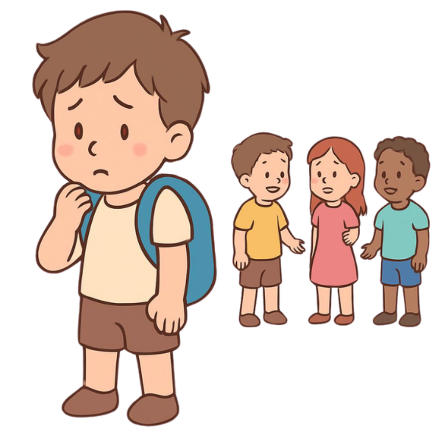
At 6, children are acutely aware of the social world — they compare themselves to peers and feel exclusion keenly. This is a quieter Touchpoint but an emotionally intense one. Listen without rushing to fix, help them name friendship feelings, and avoid minimising what feels enormous to them.
Check in if anxiety about school, friendships or performance is persistent and affecting daily life, your child shows signs of low mood (withdrawn, tearful, not enjoying things they used to love), reading/writing/maths is significantly behind peers and not improving, attention difficulties affect learning across settings, or friendships are consistently very hard to maintain.
Which Professional Does What?
One of the most common questions parents ask is which specialist to see. Here's how the roles differ.
Speech therapist (speech-language therapist):  Helps children who are late to talk, hard to understand, struggling to put words together, or having difficulty understanding language, following instructions, or social communication. This is usually the first port of call for speech and language concerns. |
Occupational therapist (OT):  Supports children with fine motor skills (handwriting, using cutlery, doing buttons), sensory processing, coordination, attention, self-regulation, and daily living skills. OTs often help when a child seems clumsy, avoids certain textures or sounds, or struggles with classroom tasks. |
Educational psychologist:  Assesses learning, cognition, attention and development — and is the professional who carries out many diagnostic and psycho-educational assessments (for example, for learning differences such as dyslexia, or for attention and developmental concerns). They're often involved when a child's learning is significantly behind peers or when school raises ongoing concerns. |
Counsellor (child or family counsellor):
 Supports children's emotional wellbeing — anxiety, low mood, big feelings, friendship difficulties, school stress, and family transitions. Counselling helps children build coping skills and process emotions in age-appropriate ways. |
Diagnostic assessment:  A structured evaluation by a qualified professional that clarifies what's going on and guides next steps. An assessment isn't only about finding a "problem" — it can also confirm that your child is developing typically, which is reassuring in itself. |
At Little Marvels, our speech therapists, occupational therapists, educational psychologists and counsellors work together, so you don't have to figure out the right door alone — we help match your child to the support they actually need.
When Should I Seek Help — And When Can I Wait?
It is always okay to seek reassurance; you never need to wait for a "serious enough" reason. As a general rule, it's worth speaking to a professional when:
Your child is consistently behind key milestones rather than just slightly later than a sibling or friend.
A difficulty is interfering with daily life — at home, in childcare or preschool, or in friendships.
Your child has lost skills they previously had.
You have a persistent gut feeling that something is off. Parents are usually right to trust their instinct.
The reason professionals encourage early action is simple: the early years are when the brain is most receptive, so early support tends to lead to better outcomes. Waiting to "see if they grow out of it" can sometimes mean a missed window. And if there's nothing to worry about, an assessment puts your mind at ease.
What Singapore parents should know

Bilingualism does not cause lasting speech delay. Many Singaporean families speak more than one language at home, and research shows bilingual children are not delayed in the long run — bilingualism is associated with cognitive benefits. Preserve your home language; a "one parent, one language" approach works well. If a delay persists beyond what's expected for any language, seek an assessment.
Support exists at both public and private levels. In Singapore, the Early Childhood Development Agency (ECDA) and programmes such as the Early Intervention Programme for Infants and Children (EIPIC) and Development Support Plus (DS-Plus) provide support for children with developmental needs. Your paediatrician or polyclinic can advise on referrals, and private practices like Little Marvels offer assessments and therapy with shorter waiting times and flexible scheduling.
A hearing check is a sensible first step for any speech or language concern, to rule out hearing loss as a cause.
Frequently asked questions
Is my 2-year-old's speech delay normal?
Some variation is normal, but by age 2 most children have around 50 words and are starting to combine two words (such as "more milk"). If your 2-year-old has fewer than 50 words or isn't combining words, it's worth a speech and language assessment — even if only for reassurance.
When should my child see a speech therapist in Singapore?
Consider a speech therapist if your child has no single words by 16 months, no two-word phrases by 24 months, speech that's hard for strangers to understand by age 4, or difficulty understanding and following instructions. You don't need a doctor's referral to see a private speech therapist.
What's the difference between a speech therapist and an educational psychologist?
A speech therapist works on talking, understanding language, and communication. An educational psychologist assesses learning, cognition, attention and development — and conducts diagnostic and psycho-educational assessments, often for learning differences or school-related concerns. Many children benefit from both.
Does my child need an occupational therapist or a speech therapist?
If the concern is talking, understanding or communicating, start with a speech therapist. If it's fine motor skills (like handwriting), coordination, sensory sensitivities, attention or self-regulation, an occupational therapist is usually the right fit. When you're unsure, a brief consultation can point you in the right direction.
Will bilingualism delay my child's speech?
No. Bilingual children are not delayed in the long term, and being bilingual carries cognitive advantages. If a delay persists across all the languages your child hears, seek a professional assessment.
What is a diagnostic assessment, and does my child need one?
A diagnostic assessment is a structured evaluation that clarifies your child's strengths and needs and guides next steps. It's worth considering when there are ongoing concerns from you or your child's teachers. An assessment can also confirm typical development, which many parents find reassuring.
My child only melts down at home, not at school. Should I worry?
Usually this is a good sign — it means your child feels safe enough with you to release the tension they held in all day. It becomes worth checking in if the meltdowns are extremely frequent, very prolonged, or hard to recover from, or if you're seeing other developmental concerns alongside them.
How early can my child be assessed?
Developmental concerns can be screened from infancy, and the earlier support begins, the better. You never have to wait for a child to be "old enough" to seek reassurance about milestones, feeding, communication or behaviour.
Is it too late to get help if my child is already in school? No. While early intervention is ideal, children continue to benefit from speech therapy, occupational therapy, counselling and educational support throughout the primary years and beyond.
You know your child best
Most children move through every one of these stages with warmth, patience and time. But you are the expert on your own child, and if something feels off, it is always okay to ask. Reaching out — whether for reassurance, strategies, or a full assessment — is a brave and caring step, not an admission that anything is wrong.
If you have concerns about your child's development, the Little Marvels team is here to help. Our speech therapists, occupational therapists, educational psychologists and counsellors offer assessments and therapy for children across Singapore.


Comments